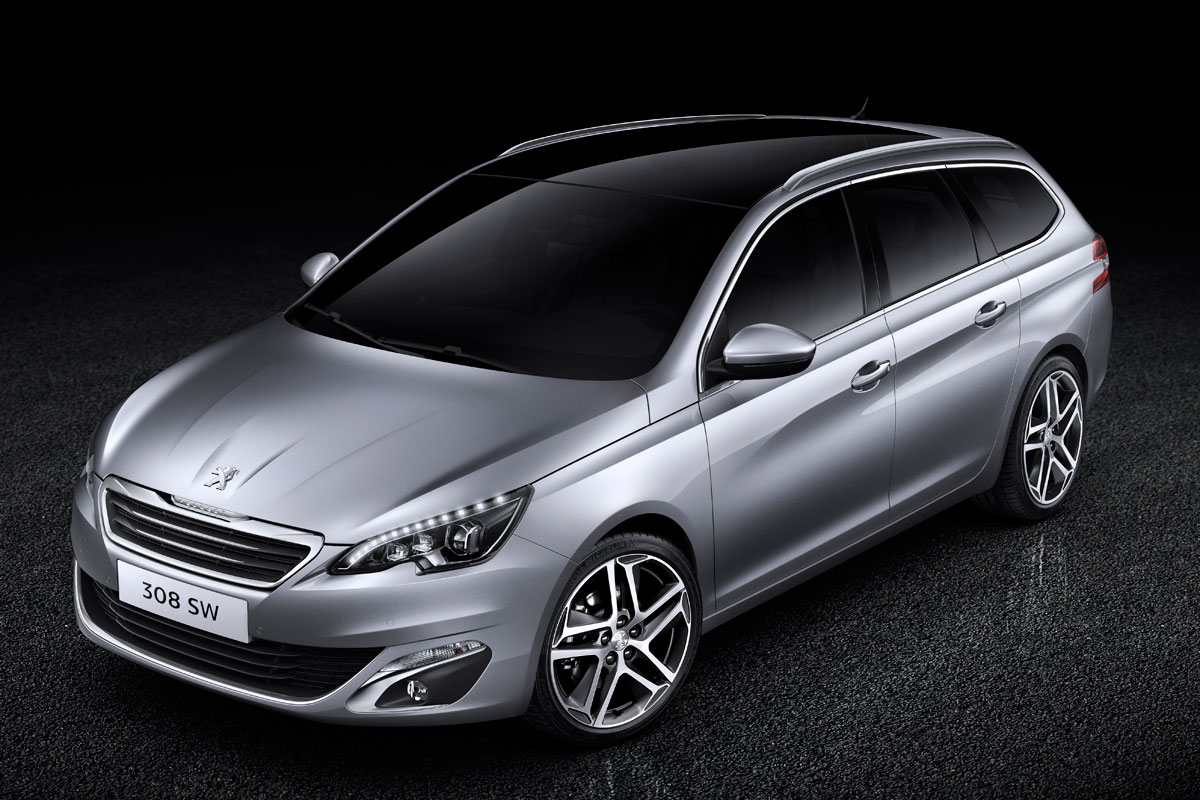
Car sales see 'strong' six months, says the SMMT
New figures show car sales rose 10.6% to 1.28m in the six months to June, compared to the same period last year.
The Society of Motoring Manufacturers (SMMT) says the figures mark the best half-year sales total since 2005.
"Improving economic conditions have helped propel the UK new car market to a strong first half-year performance," said SMMT's chief executive Mike Hawes.
"The overall market has risen faster than we were expecting but, after a bumper March, growth is showing signs of stabilising around our forecast level," he added.
Sales of alternatively-fuelled cars rose 51.3% to 23,337.
The best selling model in June was the Ford Fiesta with 11,213 sales in June and 70,153 sales in the first six months of the year.
The Ford Focus was the third best selling model in June with 7,399 sold, but it was the second most popular so far this year with 44,754 sold.
Vauxhall saw healthy sales of its three main models - the Corsa, Astra and Insignia - in June. Nissan, Fiat, Volkswagen, BMW and Audi rounded out the top ten.
Splashing out
Howard Archer, chief UK and European economist at HIS Global Insight said the figures suggested things were "looking largely bright for the motor industry" which he said should continue to fuel ongoing healthy car sales.
He added: "The motor industry will be hoping that ongoing robust UK economic activity continues to underpin consumer and business confidence, and their willingness to splash out on new cars."
Separately, a committee of MPs has called on insurers to be banned from settling whiplash injury damage claims, without first seeking for a proper medical assessment, in order to limit fraudulent claims.
The transport committee has published a report has said the government should also stop personal injury lawyers from offering inducements, such as cash or tablet computers designed to encourage injured drivers to bring claims.
Data from the Association of British Insurers (ABI) shows fraudulent motor insurance claims were the most expensive and common types of claims. The ABI said fraudulent motor insurance claims jumped 34% in 2013.
Embattled US car giant General Motors is recalling another 8.4 million cars, including 7.6 million in the US.
They are mostly vehicles manufactured between 1997 and 2014 and are being recalled for ignition switch defects.
Among the recalled vehicles, GM says it is aware of seven crashes, eight injuries and three fatalities.
GM said it would take a charge of $1.2bn for recall-related repairs - up from the $700m it had previously estimated.
However, GM said there was "no conclusive evidence" that the switch defects directly caused the crashes.
"We undertook what I believe is the most comprehensive safety review in the history of our company because nothing is more important than the safety of our customers," said GM chief executive Mary Barra in a statement
"Our customers deserve more than we delivered in these vehicles."
The recalls come on the same day GM announced details of a compensation fund for recall victims.
Kenneth Feinberg - the man GM appointed to deal with compensating those affected by the recalls - has said that the carmaker will not put a cap on the amount it will pay to victims.
Separately, Orange County in the US state of California revealed it had filed a civil lawsuit against GM last Friday.
The Orange County District Attorney alleged GM "endangered the public through deception regarding vehicle safety and reliability and gained advantage over its competitors by engaging in unfair business practices".
Audi to introduce 17 new, revamped models this year
FRANKFURT (Bloomberg) -- Audi AG plans to introduce 17 new or revamped models in 2014 and will move forward with the production of an electric version of the R8 sports car in a push to gain momentum on rival BMW AG.
“We will increase deliveries in all regions of the world, including Europe,” CEO Rupert Stadler said in a speech to be delivered today at the brand’s headquarters in Ingolstadt, Germany. The CEO expects 2014 revenue to rise slightly and forecast registrations in China, Audi’s biggest market, will exceed 500,000 vehicles for the first time.
The biggest earnings contributor of Volkswagen AG will invest 22 billion euros ($30.4 billion) in the next five years, with 70 percent going toward new products and technology. Most of the rest will be spent on expanding global manufacturing capacity, including new factories in Brazil and Mexico.
Operating profit in 2013 fell 6 percent to 5.03 billion euros ($6.97 billion). Revenue rose 2 percent to 49.9 billion euros on higher vehicle sales. Operating profit as a percentage of sales was 10 percent, above its long-term target range of between 8 percent and 10 percent.
BMW retained the lead in global luxury-car sales for the ninth straight year in 2013 even as Audi and third-ranked Mercedes-Benz stepped up efforts to overtake BMW by the end of the decade. The world’s three biggest luxury-car makers posted fresh sales records last year and expect demand to rise further in 2014 fueled by growth in China and North America.
Revamped TT
Audi introduced a fresh version of the A3 compact last year that helped lift sales 8 percent to 1.58 million cars, and is rolling out the model’s sedan variant in the United States and China this year. It presented a revamped version of the TT sports car at the Geneva show last week and will add the sporty S1 subcompact to its lineup in the second quarter.
Audi is a cornerstone of parent VW’s strategy to take the auto industry’s top sales spot from Toyota Motor Corp. by 2018.
VW reported last month that fourth-quarter profit rose 18 percent to 3.11 billion euros as record sales at Audi and Porsche offset spending on developing new models and expanding production.
VW forecasts an operating margin for 2014 in a range from 5.5 percent to 6.5 percent, compared with 5.9 percent last year. Revenue is expected to be within a range of 3 percent from a year ago and deliveries are expected to rise “moderately.”
Slovak Car Industry Group Sees Output Rising to Record This Year
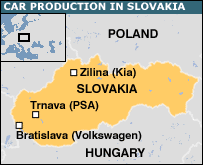
Carmakers in Slovakia will probably assemble a record number of vehicles this year as demand for models made in the country is set to defy a slowing automotive market in Europe, an industry body estimated.
The total number of cars produced in Slovak factories operated by Volkswagen, Kia Motors and PSA Peugeot Citroen will “slightly” exceed the 926,555 vehicles assembled last year, Jaroslav Holecek, president of the Slovak Car Industry Association, told journalists today in Bratislava. He declined to give an exact estimate, adding it will be less than 1 million.
The industry in Slovakia is benefiting from product mix, which includes luxury models such as the Audi-brand Q7 sport- utility vehicle, as well as smaller cars including Volkswagen Group’s subcompact cars. Output at the three carmakers and their local suppliers is supporting the country’s economic growth even as the uncertainty over the euro region has depressed demand for cars in the continent.
Slovakia’s car production jumped to a record last year after the addition of the so-called New Small Family subcompact models doubled output at Volkswagen’s factory in Bratislava. Kia, which makes Sportage SUVs as well as the cee’d and Venga models, also assembled a record number of vehicles.
Europe car registrations in March fell 10 percent to 1.35 million vehicles, the 18th consecutive decline, with Germany’s auto market plunging 17 percent, the Brussels-based European Automobile Manufacturers’ Association, or ACEA, said today. First-quarter deliveries in the region dropped 9.7 percent to a record-low 3.1 million cars.
2014 Peugeot 308 SW
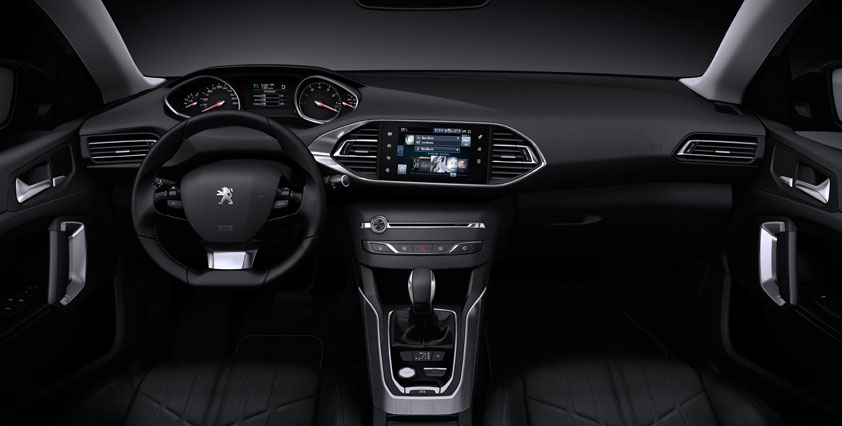
The Peugeot 308 SW is the estate version of the latest 308 hatchback, but the French manufacturer is keen to point out that the SW is more than just the same car with a bigger boot.
Peugeot has kept the front-end looks of the regular 308 but built the estate version on a longer chassis (the wheelbase is 110mm longer) that should, in conjunction with a larger rear overhang, help the car better the VW Golf Estate and Seat Leon ST for outright luggage space.
There's also a chance that the longer wheelbase could address one of our main concerns with the regular 308: rear kneeroom. Peugeot says the rear seats in the 308 SW are 29mm farther back from the front seats than they are in a 308.
The 308 SW is launching with a mix of three-cylinder petrol engines and four-cylinder diesels. The 1.2-litre three-cylinder turbocharged petrols are the latest in Peugeot's line-up, with power outputs of 109bhp and the 129bhp unit we're evaluating here – they emit as little as 109g/km of CO2. The entry-level motor uses a five-speed manual gearbox, while the more powerful petrol gets a six-speed manual or a six-speed automatic.
There's a wider selection of diesel motors, with CO2 emissions of as little as 85g/km; none of the diesel engines emits more than 111g/km, even when equipped with an automatic transmission. There's a 1.6 with 91bhp and a five-speed gearbox, a 1.6 with 114bhp, a six-speed gearbox and engine stop-start, and a 148bhp 2.0 with either a six-speed manual or a six-speed auto. The cleanest engine in the line-up, though, is the BlueHDi 1.6 with 118bhp, engine stop-start and a six-speed manual; Peugeot's figures for this motor are 88.3mpg and 85g/km of CO2 (on 15-inch or 16-inch wheels).